
Recommend: Yes.
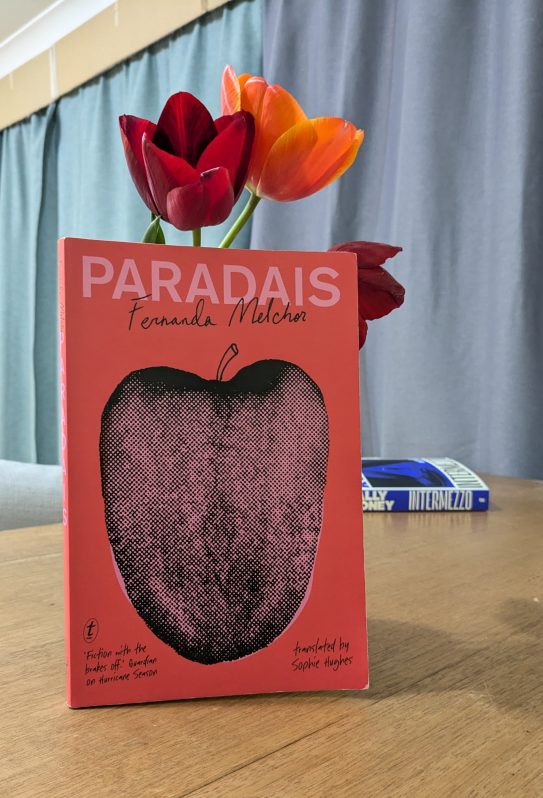
Paradais quickens the pulse. From the first page, the confidence of the writing is exhausting, but exhausting in a good way, as if there was no start at all to this novel, as if you’ve stepped in mid-story and have to run to catch up. That’s because the novel begins with a rushed confession that spills from the narrator, Polo. The confession is about the crime (vaguely alluded to) that the novel will conclude with.
The crime, naturally, gives the novel it’s tension. We know quickly that Polo is witness to this crime but we don’t know his exact level of involvement. We know that it is motivated by the perverse sexual obsession of his friend, Fatboy, with a neighbouring hotbody. To be more truthful, Fatboy is not a friend of Polo. Fatboy is a teenager that lives within the vacuously well-heeled gated community that employs Polo as a pool cleaner and allows Polo to leech off him in return for an ear in which to ooze into. Polo forces himself to listen to Fatboy’s delusions about what lurid acts he’d impose upon his neighbour, because these prurient rants are accompanied with free alcohol and cigarettes.
In a lesser writer’s hand, this novel would fail abysmally. It would tend toward the misogynistic and, worse, repetitive. It would be easy to grow tired of the different ways in which both boys exploit each other. However, within the dark contents and furious pace of the small novel, Fernanda Melchor imposes a light touch.
Melchor takes care to unravel different layers of society in the gated community where much of the novel takes place. Polo sits uncomfortably at the bottom of the stratification, and there are so many hierarchical layers to climb through to be on even footing with Fatboy’s object of desire (the middle-aged neighbour, who does not work, and is entirely funded by her mogul husband) that it’s clear any effort expended trying to gain status will be a complete waste. There is no chance for Polo to ever be one of the wealthy that he serves. Polo is completely socially isolated from this woman – his life and hers are lived closely and with commonality but with no shared opportunity. Without respect, she uses the pool he cleans, walks on the grass he mows and eats the food he serves. So when Fatboy’s verbal barrage turns increasingly frantic and violent, Polo has no reserve of empathy. He listens, deadened by alcohol, impassive. Increasingly complicit.
The simple plot is given depth by its development of Polo’s character. Polo’s cousin, a town whore by Polo’s own admission, has fallen pregnant, and this side-story is a very well executed questioning of Polo’s reliability as a narrator. I love when novels seep out information on unexpected timelines, and the shock of that makes it clear that your previous understanding of the story was actually very superficial. The sense of scale that affords a small novel is a great trick of the author, and one I am always eager to see performed. The cousin’s pregnancy is announced early, and definitively, but as the story progresses the (purportedly simple) circumstances around that pregnancy blur. If this is more complicated than the narrator originally suggested, what other mistrust lurks in the first half of the novel?
Paradais is swollen with hatred, the smell of it pervading like fallen, rotten tropical fruit, spoiling an otherwise picturesque scene. Paradais asks, when the distance to the top is too far to be travelled, what will those at the bottom live for?
“Free, whatever it took, he’d tell them, and it would be Polo himself who would raise the barrier to the police cars when they showed up later, with their sirens off but ready, like dogs in pursuit of their prey.”


Leave a Reply