
The keen reader of this blog will notice that this game review is uncharacteristically soon after the last one. Impossibly soon you might say. There is a good reason for this. The way I played Death Stranding was in chunks of 5-10 hours every time I finished another game. My history with the game goes back to 2023 and this was actually the second game I started on the PS5. It is through this lens that I experienced Hideo Kojima’s auteur passion project of Death Stranding.
Death Stranding is a complicated game to describe. It relishes in defying conventional genres. If you’ve never heard of the game it is worth looking at the original trailer (link here). This should make no sense to you and don’t worry, neither will the rest of the game.
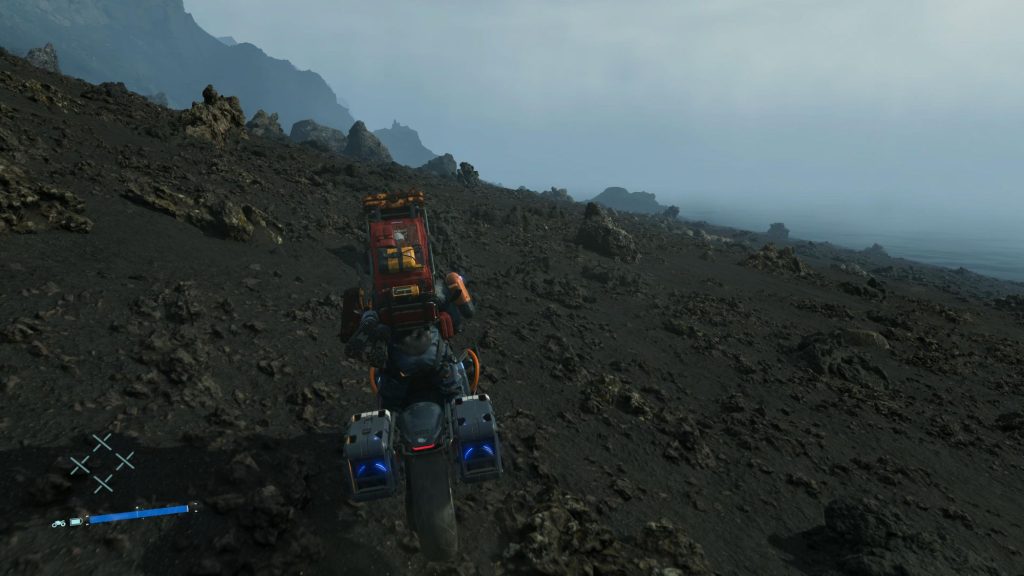
The core actual gameplay is basically about Sam Porter Bridges travelling through North America by delivering cargo between and connecting the now-isolated people to reunite the country. This is different to a walking simulator. A walking simulator is mostly non-involved from the player perspective, but Death Stranding is exquisitely hands-on at every point. Every step is very physical. You are constantly adjusting Sam’s balance, bridges/ropes/ladders need to be placed to cross minor obstacles and rivers/mountains form impenetrable barriers.
Amazing, the walking is the best bit of the game. It is very satisfying and turns most of the game into a puzzle solving exercise. Both tactical (should I go up that hill to avoid this creek) and strategic (how many octopus fossils with umbilical cords do I think I can carry over the mountains). There are combat and stealth aspects which are enjoyable and satisfying as well, but the game almost pushes you away from these outside of a few specific set pieces.
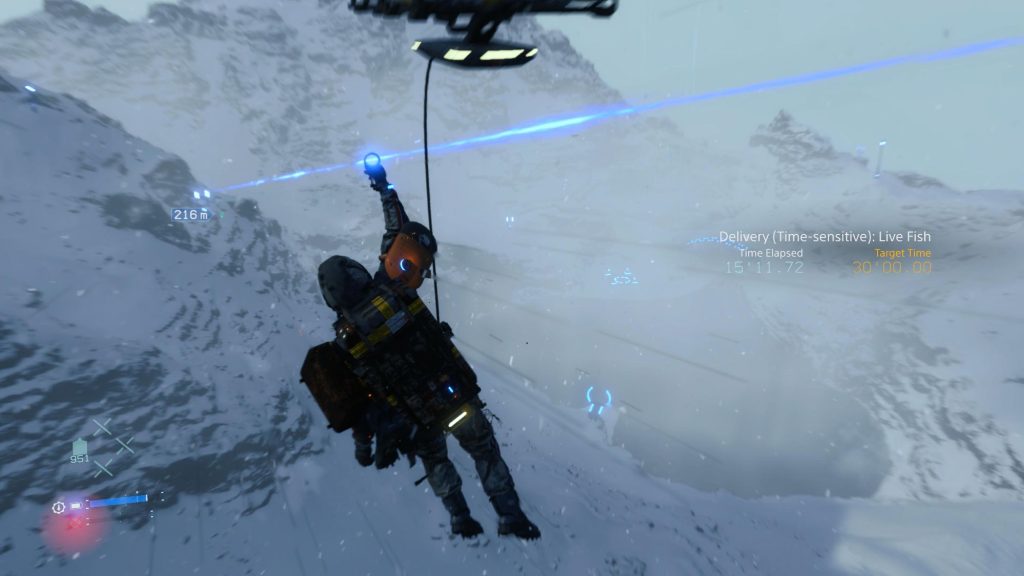
A contrast to this game was Still Wakes the Deep. That was more representative of a conventional walking simulator. A key criticism I had of that game is that it doesn’t fully achieve what makes gaming a unique medium. Death Stranding however is an experience defined and continuously strengthened by the fact you are playing it as a game. An example of this is the embodiment of the key connection theme. As you connect new areas to the new United States, you enable other people online (as in real other people) to contribute to these areas. These contributions take the form of friendly signs and more importantly infrastructure, such as roads and bridges, that make your subsequent trips much easier. The relief when you find a zipline that carries you the last part of your trek down the mountain does make you feel like you are benefitting from a community and getting tangible benefits from Sam’s efforts.
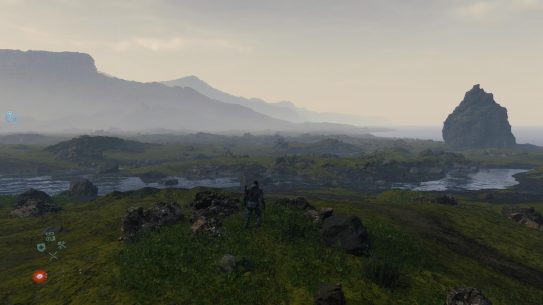
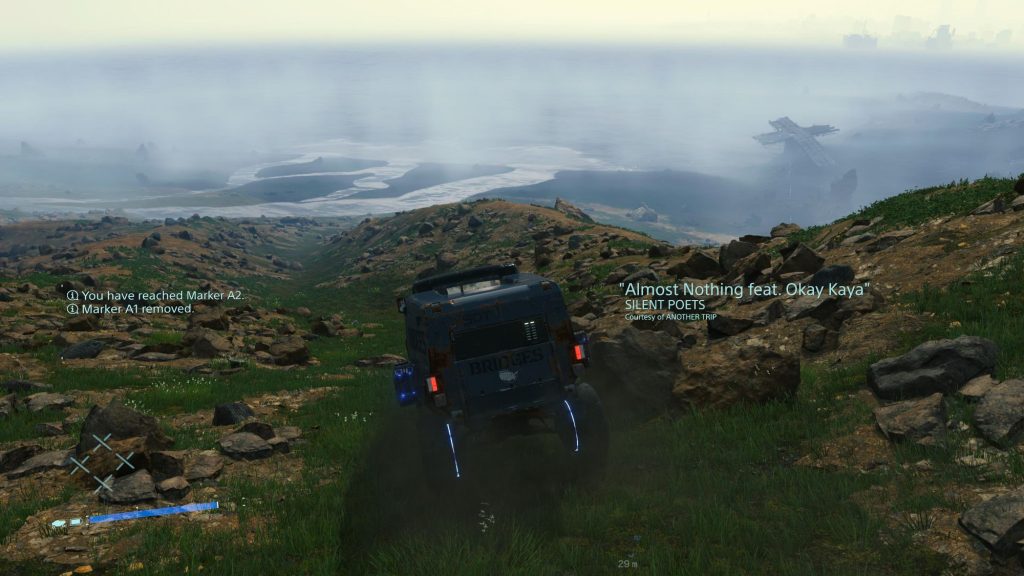
The traversal focus of this game is helped by the fact that the landscapes look gorgeous. They are both stunningly realised graphically and beautiful in the way that people imagine New Zealand’s South Island to be. Separate to the landscapes (and as you could probably tell from the earlier trailer) there is a whole different supernatural vibe going on a well.
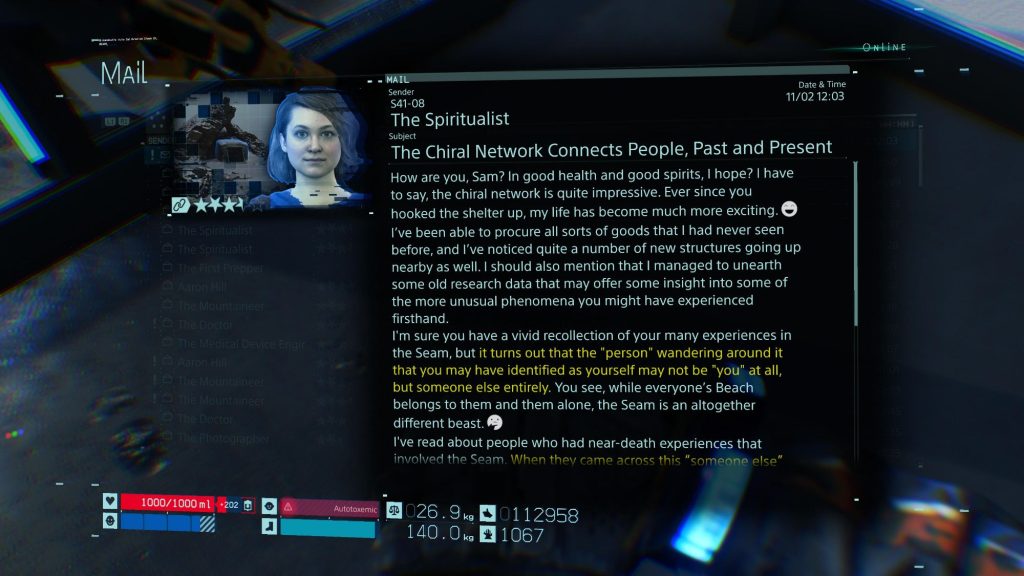
The story of this game is not a simple thing to either comprehend or convey. I’m not even going to bother trying to explain it, but suffice to say it is both unique and deep and interesting for it. There are so many arcs and threads running in parallel that are vaguely related it is often difficult to understand the bigger picture. My understanding of the plot was not helped by the fact that I experienced it sporadically over several years, but I suspect it is broadly incomprehensible regardless. There were multiple aspects (extinction entities, DOOMS) that if they were explained to me I did not retain.
This is not because the game hides its story (as Dark Souls does). Kojima is infamously a fan of exposition dumps through cutscenes. As an example some of the main characters have names that are only very mildly different (Die Hardman, Heartman) and multiple characters have multiple identities. The last 20 minutes of content literally took 3 hours to convey. It was endless cutscenes and exposition. The credits rolled and there was another whole section after it. I know this is classic Kojima, but it felt like it was really starting to stretch the goodwill that had been built up.
The game has an equally strong soundtrack to go along with the rest of its design. Reading some trivia (accessible in game by finding memory chips) it seems like Kojima heard some albums he liked and then made the game around them.
- https://music.youtube.com/watch?v=GKAywP6yd60&si=gRg9BWJDHC5BFvjq – Playing as you crest the mountain range after a particularly brutal enemy encounter and see a city, your destination, on the horizon is powerful feeling this song captures.
- https://music.youtube.com/watch?v=HVStfWZsdBc&si=Ew-7WP5TSgfSgqH1 – There are a handful of albums that mostly feature in the game. They are all ambient, sombre and slow.
I liked Death Stranding, but there’s a reason I dragged it out over so long. It understands that gaming is a unique medium, but can also have its boundaries pushed. Nier: Automata is the closest thing I have played in that regard, but was a completely different experience. I think if you made Death Stranding more “fun”, it wouldn’t be Death Stranding anymore and I wouldn’t respect it.
Rating: 4/7 packages delivered “mostly undamaged”


Leave a Reply