
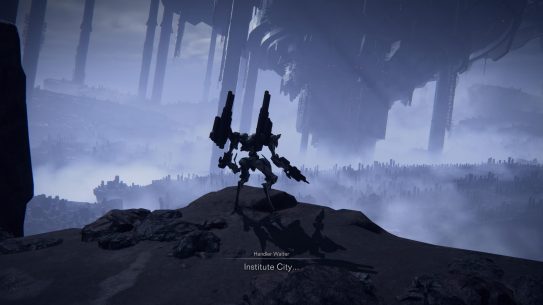
A key part of getting a Playstation 5 has been getting in touch with my inner weeb. Persona, Kojima and Final Fantasy are all icons of Japanese gaming that I had never engaged with before. A few games in and I am past dipping my toes in the water, I’m at the level where things start to get uncomfortable. There was one big obvious gap in my cultural learnings though, giant mechs. Thankfully, Armored Core VI: Fires of Rubicon (AC6) launched itself down from the stratosphere and landed smoking out of all its vents in the JB HiFi special aisle on a Monday date night.
I had no idea how AC6 would play when I bought the game. All I knew is that there were a bunch of mechs (called ACs in the game, it is particular on the language) and it was made by the same team that did Elden Ring and Dark Souls. Mech culture like Gundam and Neon Genesis Evangelia had never really appealed to me. However enough people seemed to like AC6 last year that I was prepared to give it a shot.
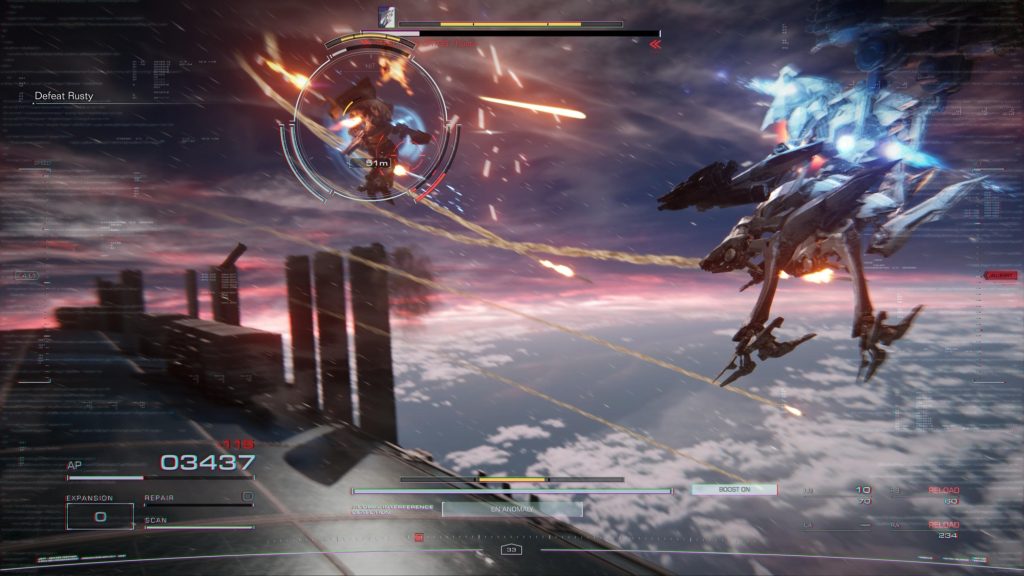
AC6 is at its heart a dance game. Ballet to be specific. You pirouette, leap and soar around tightly choreographed stages while launching hundreds of missiles, firing thousands of rounds and slamming your pulse blade into your dance partner. It’s fun.
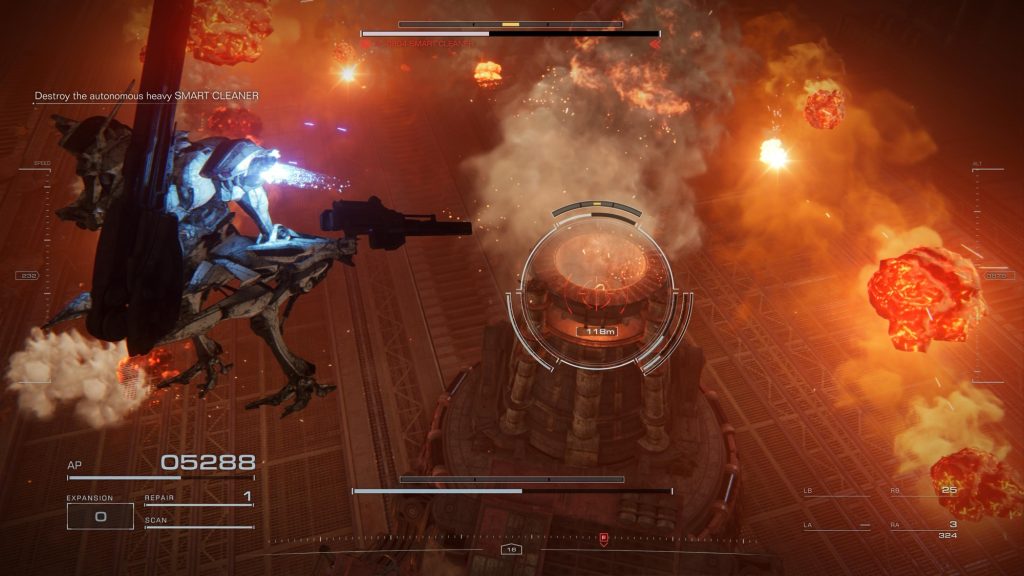
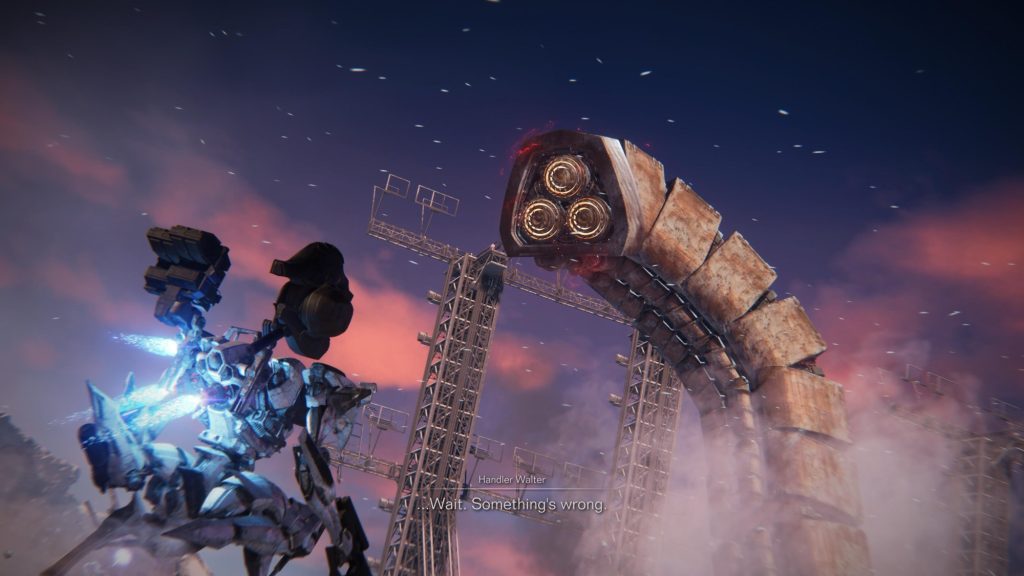
Each level is very linear and basically consists of a series of interconnected combat-focussed arenas. These vary in size and shape as you traverse tight underground corridors, abandoned cities and all manner of non-descript industrial wastelands. The different levels drive different combat styles and there is often some level specific novelty like satellite cannons or a fleet or warships. Some of them levels are reused in smaller follow-ups, but they don’t wear out their welcome.
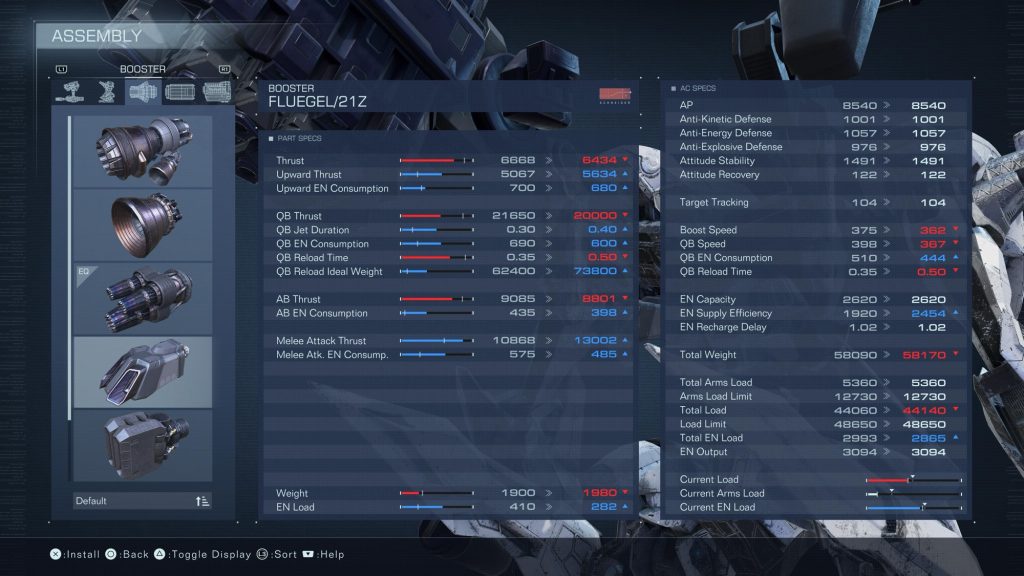
There are a few different kinds of AC, from nimble bipedals up to basically a tank. They all handle broadly similar, but are distinct enough to give different experiences. It’s the sub-levels of customization that really open it up. By the end of the game you have dozens of weapons available on each of your four slots and a massive range of every other part to setup your AC. There is no optimum build and in nearly all cases, there is no objectively better equipment. You just have to trade off bigger, badder guns against slower, tankier frames on a sliding scale with 15 dependent axes. That being said my preferred approach of having something nimble with the biggest missiles I could find seemed to work throughout most of the game.
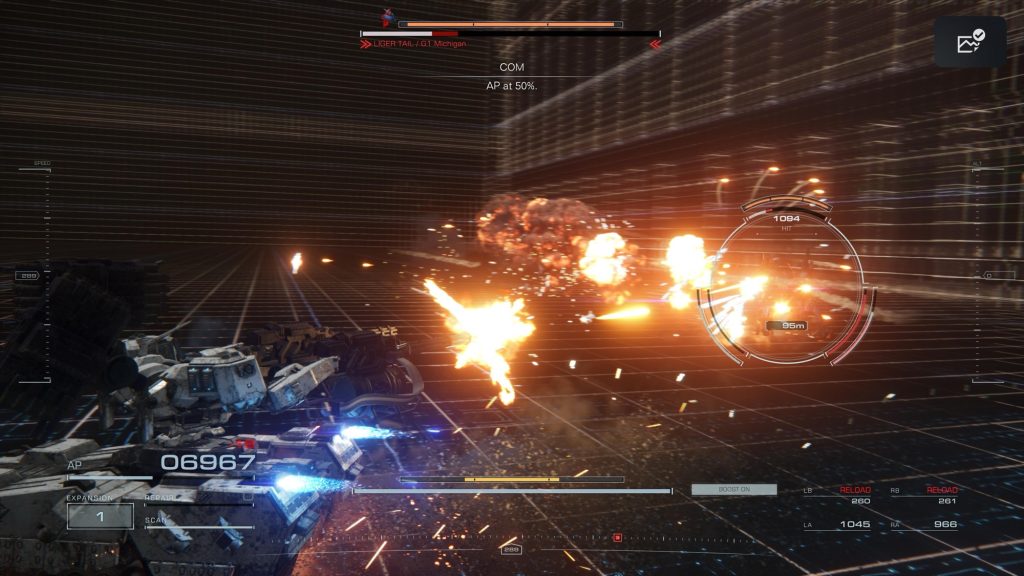
Most of the enemies (that aren’t cannon fodder) are themselves ACs. There are some more unique ones, like the giant mining machine, but the main challenge is other ACs. They use the same gear as you, move like you and are generally a pretty even match. You can’t avoid all their attacks and they can’t avoid all yours. It’s a damage race as you wear each other down, avoid whatever hits you can and try to overload the enemy for critical hit damage. It is relentless, fast and chaotic.
The plot is a bit confusing. You are dropped into the desolate planet of Rubicon, ruled by corporations and beset by calamities as annual occurrences. Your handler is content to farm you out to anyone who pays which causes you to confusingly change sides every single mission. Rubicon is important because of Coral which is some form of alien life form… resource… thing…. that is never really explained. It comes together a bit more at the end, but the plot is really more of an aesthetic than anything else. Elden Ring and Dark Souls are similarly vague, but they feel so much more human in how they convey their own dying worlds and I got a lot more out of those experiences.
Music is good. Not Elden Ring or Last of Us good though and it’s basically all frantic rave tunes. This fits the industrial aesthetic and the rapid unrelenting nature of the battles well though.
- https://music.youtube.com/watch?v=RDrj6cdOnNo&si=8xeAsx3Q3ASQhrCN – Early in the game, everytime you start up one the practice training sessions this song plays and it syncs up perfectly with the startup cutscene and animation of the battles.
- https://music.youtube.com/watch?v=aCu93MKq7ec&si=GvI-8MrtF0Ynd8GH – This one had the most views on YouTube and I can see why. It has a bit more character than some others as it supports a particular story beat.
It’s really the linear combination of different ACs, different enemies and different layouts that gives a pretty simple game an engaging level of depth. Like all good games it doesn’t overstay its welcome and I wrapped it up in about 12 hours. I enjoyed AC6’s commitments to its atmosphere and boosting around in my AC, but it was missing the deeper connection that would elevate it further for me.
Rating: 5/7 mercenaries are supported by ALLMIND


Leave a Reply