
Recommend: No.
So far, ageing has been promising. Growing up as a child, bedtimes become later and later and the day stretches longer in front of you. In teenage years new freedoms are uncovered – is there a more thrilling frontier to conquer than the first MA movie? At university there’s the promise of knowledge and expanding opportunities. Even the working years, where repetition grinds, fill the bank account with the promise of future adventures that were previously unfinanceable. But, with death certainly looming, this upwards trajectory of promise must whittle down at some age threshold. That threshold is where Amanda Lohrey decides to situate The Conversion.
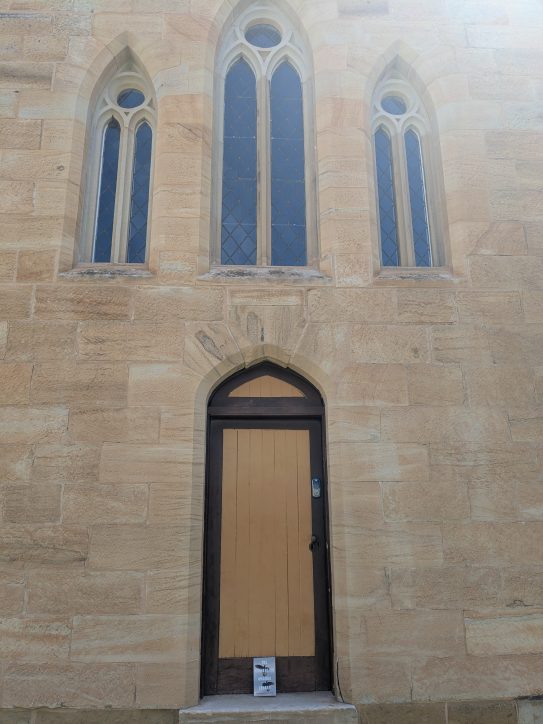
After her husband dies, The Conversion’s narrator pursues a dream that belonged to her husband in the last years of his life: to move out of Sydney and buy a rural, deconsecrated church with the view to renovating the space to a house. The novel swings in and out of the present, with a lot of time spent reviewing the final year of the narrators’ marriage.
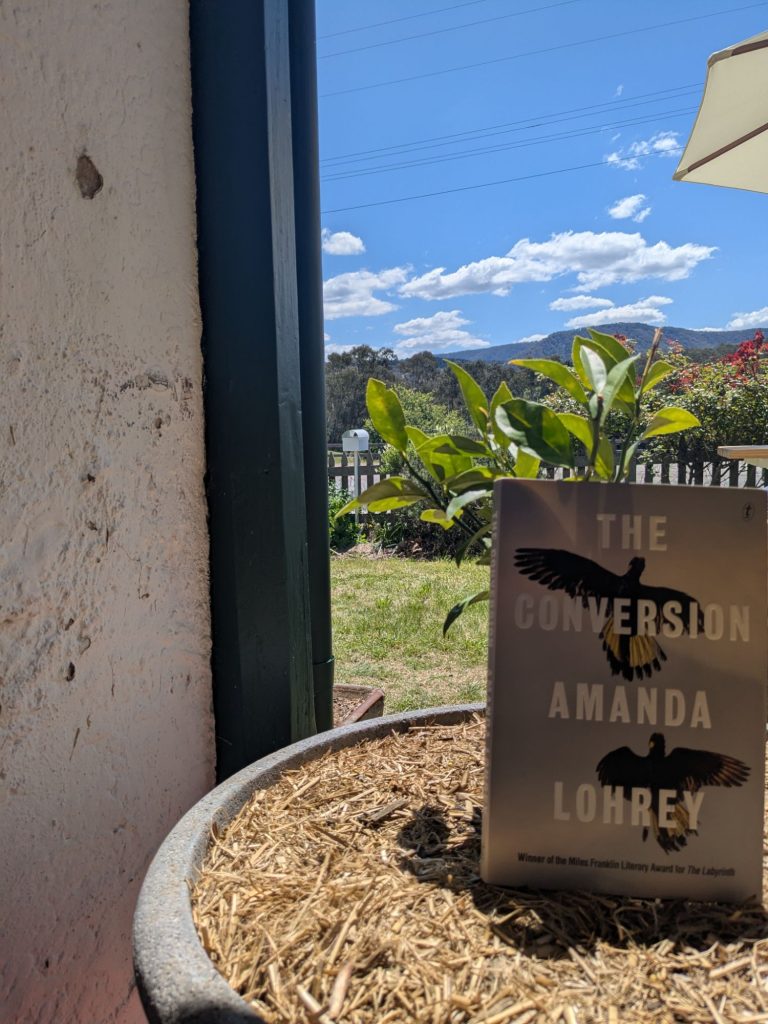
This is not the world’s most thrilling premise. In all honesty, I only bought this novel was because her previous, The Labyrinth, was well reviewed. The reason I chose to read it now was because it had large font and I was tired when I pulled it from the bookshelf. I was left asking myself: am I too young for this, or is it just not a very good book? Is old person literature its own genre, one soaked in blandness that will not offend worn out sensibilities?
The writing itself is fine, potentially even good. The evocation of a small village-town on the fringes of a larger regional hub was calming. There were the hallmarks of inland NSW: rivers, drying fields, highways. Periphery characters allowed for a welcome change of perspective away from the narrators’ stifling stiffness. I did warm to a random side character that is a passionate (unhinged) high school drama teacher and then runs away (/converts) to a cult – sign me up to her spin off.
These pleasing components never add up to much though. The narrator is cold and, I’ll just say it, boring. Her husband is dead. She’s moved somewhere isolated. She has re-entered the workforce. That’s all fine. That’s almost interesting. But, by God, if I have to read one more paragraph on her ruminations of stained glass windows I think I will burn the book. The book is overfilled with quasi-intellectual discussions of space and religion, without any personal connection to weigh it down. Both the narrator and her husband are deeply unlikeable and there is no sense of a shared love between them. I suppose the narrator is meant to be grieving but could she maybe do it in a more interesting way than thinking about how “vertical space” can be translated into “horizontal space”.
There’s also a really odd treatment of sex that was very off-putting. At one point a childhood friend of the narrator stays with her overnight at the church (just one big shared room) and she hears him wanking at night (in the big shared room) and it’s not treated as a big deal. Weird. To be honest, I found it a bit hard to recover from that scene. Is this behaviour just totally unremarkable when you get older?
It’s never all that clear what “Conversion” Amanda Lohrey is focussing on. Is the narrator converting religiously? Is she converting real estate? Is she converting into the next stage of her life? This misdirect gleans all the more luminescent given how clean the prose is. Metaphors are few and far between. Dialogue is to the point. Such a barren style needs a clear thematic purpose, but Lohrey won’t commit. And I wont convert.

Leave a Reply