
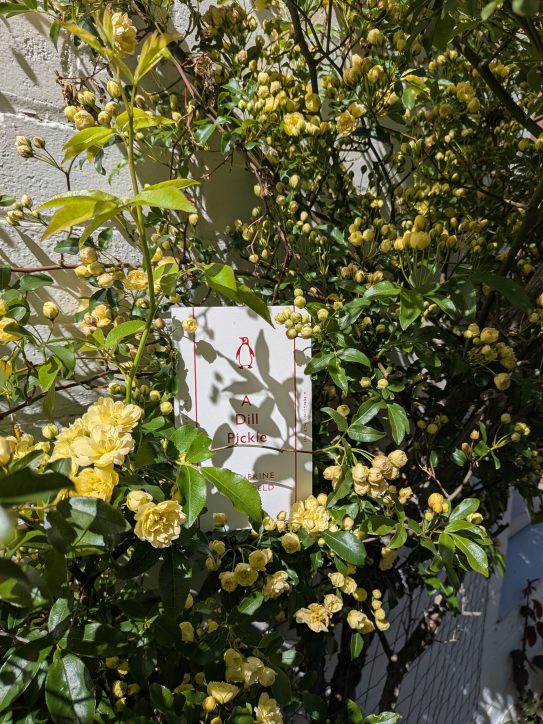
Recommend: No
Moving up in your career in finance has a few consequences for your bank account. But there are other little perks as well. You get taken out to dinner by brokers who have to pay for your cocktails even as you wonder, if they were being true and honest, whether they hate themselves. There’s the sick elation as you walk out of the office at 5pm, as the grad glances at your back, texting his parents that he will be home late. And then there’s the fact that sometimes you can talk to your clients about books, if you hide it well enough.
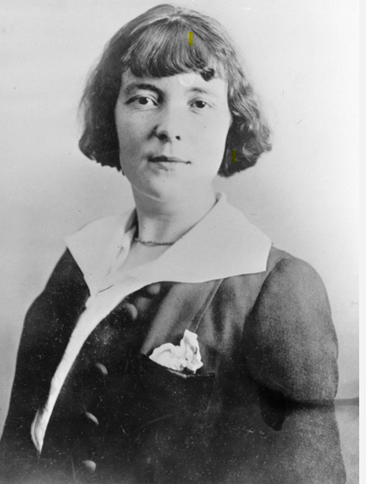
During one of these conversations, the chat window sheepishly dragged to a corner of my screen my boss can’t see, I said I was reading my first Katherine Mansfield. Before this book, Katherine Mansfield was some icon of literature to me. I never knew really what she was about but important writers referenced her. Ali Smith wrote an entire short story where a relationship is torn apart by the husband’s obsession with studying Mansfield’s work.
That reverence didn’t extend very far in the finance community.
“A quick Google has confirmed that it is not something I would be interested in,” said the client.
I can’t disagree.
Mansfield’s work feels so dated. Nearly all the short stories within A Dill Pickle make me feel like I am absorbing a season of Bridgerton. There is a ribbon shop with a testy attendant. A ball where young woman ditches a slimy older man. Some kind of free weekly concert in city park amphitheatre where there’s a competition to see what old lady has the best fur hat (sorry, toque). The tensions are painfully quaint. One story, named The Doll’s House, makes a whole hoo-ha over which ten-year-old gets to see a dollhouse first.
There were even words I needed to look up because they are so archaic, falling under the “historical” category in Google dictionary:
- toque: a small cap or bonnet worn by a man or woman.
- brougham: a specific type of horse-drawn carriage, a style of early automobile body, or a place name like a street or former children’s home
Katherine Mansfield is widely lauded as a master of the short story but I didn’t see anything masterful in her constructions. Each story is neatly one dimensional. Characters seem to occupy a limited inner life. These short stories are like episodes of the Summer I Turned Pretty if they were a product of the 1920s: character motivation is simple, attempts at humour basic, and romance springs out of every plot, even though the characters’ chemistry is strained at best. On two occasions Mansfield tries out a twist ending. She hides information from the reader (eg. a telegram is received at the conclusion of a story but the reader doesn’t get shown its content). These fall flat both times and hinder the pacing of the story, leaving the reader unnecessarily confused over what should be a very simple plot.
The two best stories of the collection rely on the timeless quality on wishing your circumstances were different. My favourite story of the collection was the titular A Dill Pickle. The protagonist meets a old male friend (maybe even flame) for the first time in years at a café. At the start, the pair enjoy reconnecting and recollecting past scenes of their relationship. There is nuance in A Dill Pickle, even from the start, that is missing in other stories. Memory lane begins sweetly enough but each side recalls the past with different emphasis, and different levels of care. As the conversation progresses, it is revealed that this friend treats our protagonist as a fond but vague memory that represents just one of many stories in his own narrative. He goes on to recount the many countries he has visited and speaks of the many friends made.
“Ah, when I was in Russia…”
She broke in: “You’ve really been to Russia?”
“Oh yes. I was there for over a year. Have you forgotten how we used to talk of going there?”
“No, I’ve not forgotten.”
This man has lived out all of the dreams that our protagonist gave up on long ago. Then to learn that these dreams were even explicitly shared between the two when they were young, and she’s since been cut out of them. It’s devastating.
The Tiredness of Rosabel is the second of these more relatable stories. It’s not as subtle as A Dill Pickle, nor is the scope as far reaching. It is, however, a fine slice of life depiction of a young woman yearning for circumstances out of her reach. The eponymous Rosabel is a shop attendant at work when a beautiful rich young couple come into the store. Later, after a boring commute home, she wonders of the woman, “suppose they changed places”… An extended daydream precedes a literal dream about the joys of this other life that Rosabel does not in reality own.
There are pockets of fine writing in A Dill Pickle. On the whole, though, it smells musty. Many scenes play in my mind with an aged sepia tinge. It’s not really something I am interested in.


Leave a Reply