
Recommend: No
We are going to Japan in April and I have mixed feelings about the trip. All my intrigues and reservations with Japan stem from modern entertainment. Will I have a Scarlett Johansson moment staring listlessly out of a skyscraper hotel? Unlikely – the building featured in Lost in Translation is under construction for a year. Will I relax into the long cross country train trips that absorbed characters in Seichō Matsumoto’s Tokyo Express? We will be transiting by train but only in expensive, short, convoluted trips that require multiple transfers. Will I be as satisfied with the mundanity of convenience stores as the narrator in Convenience Store Woman was?
It’s not a coincidence that I have a confused relationship with Japanese literature. Recently, I have purchased a lot of it but, on the whole, I don’t love it. As my disposable income has grown, I am beginning to exhaust the English novels at Blackheath Gleebooks, so I reach for novels in translation. A disproportionate amount of these are Japanese, which I have heard second-hand is due to the tastes of the lady that places the book orders.
There are examples of Japanese literature that I very much like. The Pachinko Parlour by Elisa Shua Dusapin and The Hole by Hiroko Oyamada are recent wins. But there’s a theme to these novels that I identify with – the narrator is an outsider. Each novel is propelled by their female leads trying to find a footing amongst the general hostility of Japanese society. And of course Lost in Translation was borne of the exact same theme. Scarlett Johansson barely tried integrating in Tokyo because she was so uncomfortable. She chose an old, unrelatable white man as her object of attention over an entire city. How can I be excited for a place that characters seem only to want to leave?
And it’s not the fact these are novels in translation. The French novels I have read in the last year burst at the seams with passion for France: The Lover by Marguerite Duras yearns for French culture in the steamy tropics of Indochina; A Sunday in Ville-d’Avray by Dominique Barbéris luxuriates in the suburban outskirts of Paris; and even Marie Darrieussecq’s flawed Pig Tales overflowed with vibrancy and sensuality set in a fictionalised France. They leave me feeling like I am missing out on something not living in France.
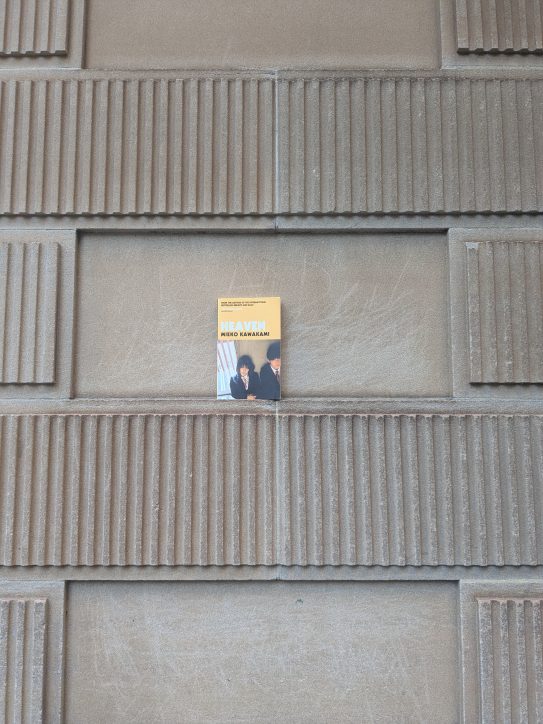
It’s in this mindset that I began reading Heaven by Mieko Kawakami. I needed a piece of beautiful Japanese literature to spark joy about this upcoming five-figure trip that we have already booked. I was looking in the wrong place.
Heaven sounded boring from the blurb. It was billed as an “illuminating novel about the impact of violence and the power of solidarity”. Two fourteen-year-olds are bullied at high school and form a friendship on the back of this shared trauma. “But what, ultimately, is the nature of a friendship when your shared bond is terror?”.
This book was shortlisted for the International Booker Prize. The blurb must just be poorly translated, without an eye for marketing to Western audiences. I stifled my yawns and began reading.
Forty pages in and I couldn’t do it anymore. This book had everything I abhorred in Japanese literature. It was unpoetic. The characters were one-dimensional at best and infantile at worst. The dialogue was stilted. The plot was as incredibly bland as it read on the blurb. A chill ran through me as I read: will Japan be this devoid of engagement in real life?
Here’s an excerpt of one of the teenagers confessing her ‘feelings’ with an eloquence that apparently qualifies for a Booker shortlist:
“But things can be good sometimes. Really good. Like when I’m talking to you or writing letters. Those things are really good for me. Then I start feeling like everything’s okay. And that makes me happy. But know what? That feeling like everything’s wrong and this feeling like everything’s okay, I guess a part of me wants to believe that neither of one of them is, like, natural… I guess I want to feel like they’re both exceptions to the rule. I mean, I almost never feel like everything’s okay but just because most of my life feels wrong doesn’t mean that’s how I want it to be.
…”
There was more to that paragraph, but I couldn’t bring myself to continue type it out. It’s shameful writing. What an ugly mess. No teenager would be caught dead talking like that. No adult would be caught dead recommending a book with such excruciating dialogue.
As if that wasn’t painful enough, the two teenagers begin sharing letters to each other. I’ve had more fun reading the backs of cereal boxes.
Hi Kojima, I read your letters a bunch today. You’re using a mechanical pencil, right? I use a regular one.
The relief when you stop a bad book is elating. Such an abrupt end to the pain, with only $10-$35 missing from your pocket. A small cost. Like biting into an apple and realising it’s floury. Not inedible but unpleasant. You’ll scrunch your face, swallow that first bite, maybe take a second, and then relish throwing away the rest, uneaten.
The cost of the upcoming trip to Japan is orders of magnitude above that. I hope that I can find something more poignant between the covers when I am there.


Leave a Reply