
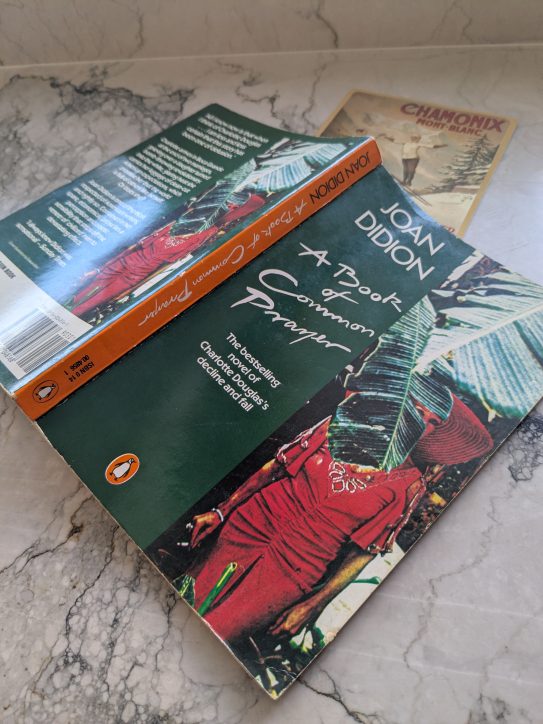
Recommend: Yes.
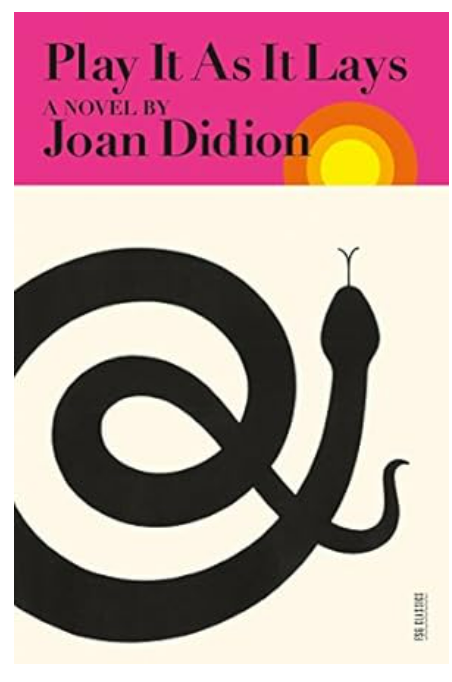
Play It As It Lays is Joan Didion’s most famous novel. There is an edition with a sick snake cover.
It’s like saying Gladiator 2 made Paul Mescal famous. It may be a historical fact but it feels unfair. While not her most famous, A Book of Common Prayer is her best. Well, at least the best I have read so far. Didion didn’t dedicate much of her time to fiction. She has five novels to her credit. Play It As It Lays is the only one that has been widely read. I know this because I read a lot about Bret Easton Ellis and it’s Play It As It Lays that is listed as an inspiration.
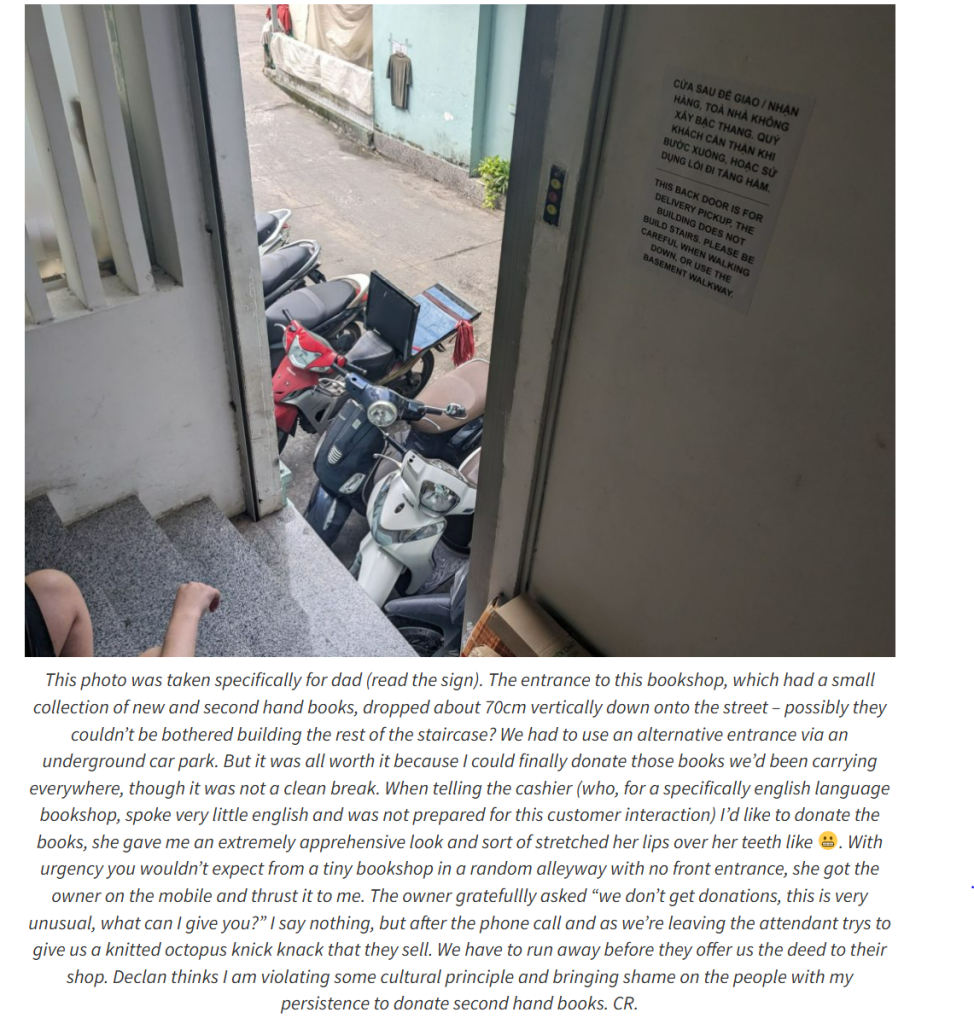
Of course I enjoyed Play It As It Lays. In fact, my copy is probably still located where I last left it – in a tiny English-language bookstore in Vietnam with an even smaller second-hand selection.
I shouldn’t have been surprised that A Book of Common Prayer would surpass Play It As It Lays in quality – it was published in the 1970s, that golden era of literature.
The book’s subheading is “The bestselling novel of Charlotte Douglas’ decline and fall”. Charlotte Douglas is the object of inspection of the novel’s narrator, Grace. Charlotte has come to the (fictional South American) country Boca Grande to escape a few personal disasters. Or so we are told from the first page.
I will be her witness.
That would translate sere su testigo, and it will not appear in your travelers’ phrasebook because it is not a useful phrase for the prudent traveller.
Here is what happened: she left one man, she left a second man, she travelled again with the first; she let him die alone. She lost one child to ‘history’ and another to ‘complications’ (I offer in each instance the evaluation of others), she imagined herself capable of shedding that baggage and came to Boca Grande, a tourist. Una turista. So she said. In fact she came here less a tourist than a sojourner but she did not make that distinction.
She made not enough distinctions.
She dreamed her life.
She died, hopeful. In summary. So you know the story. Of course the story had extenuating circumstances, weather, cracked sidewalks, and paregorina, but only for the living.
What a master Didion is. She is in complete control, right from the start. Her narrator, Grace, is a local. Grace has married into one of the (few) powerful families in Boca Grande. An outsider like her subject, Charlotte, but less so. An outsider that knows, to some extent, what’s inside.
The whole novel crackles furiously with great writing. The plot is pacey at the beginning but doesn’t quite hold its momentum the whole way through. There are too many repetitions in the writing that make it feel like one foot forward takes you two feet back. For example, certain phrases are constantly called back to (‘Tell Charlotte she was wrong’; ‘Tell her it’s all the same’; ‘Tell her that for me’). In that way, the equatorial, seasonless country of Boca Grande is the perfect setting. The repetition builds a claustrophobic atmosphere, one weighted with the foreshadowing of death that was crafted in the novel’s opening. So what am I saying? The repetition was, at times, frustrating. But this is a novel of a frustrated woman. It felt in keeping with its identity.
Fevers relapse here.
Bacteria proliferate.
Termites eat the presidential palace, rust eats my Olsmobile.
Twice a year the sun is exactly vertical, and nothing casts a shadow.
The bite of one fly deposits an egg which in its pupal stage causes human flesh to suppurate.
The bite of another deposits a larval worm which three years later surfaces on and roams the human eyeball.
Everything here changes and nothing appears to. There is no perceptible wheeling of the stars in their courses, no seasonal wane in the length of days or the temperature of air or earth or water, only the amniotic stillness in which transformations are constant. As elsewhere, certain phrases in these transformations are called by certain names (‘Oldsmobile’, say, and ‘rust’), but the emotional field of such names tends to weaken as one leaves the temperate zone. At the equator the names are noticeably arbitrary. A banana palm is no more or less ‘alive’ than its rot.
Is it.
I tried to tell Charlotte this but once again Charlotte did not quite see my point.
Charlotte did not take the equatorial view.
Of anything that happened.
The writing is just killer. Didion is a queen of grammar. The sentences are a little off kilter (‘Is it.’). There is a balance slightly disturbed. Keeping you on edge. Hitting you on the head as the sections wrap up. The ‘equatorial view’ – jaw dropping.
If I post-marked every paragraph I loved, the binders would stretch ugly with the new bulk. Fabulous writing. Breath taking writing.
I’m going to give this copy into Steven at Gleebooks to on-sell but I dearly hope I will get the pleasure to pick another copy up at a later date. Maybe on my next visit to a tiny little bookstore in Saigon.


Leave a Reply