
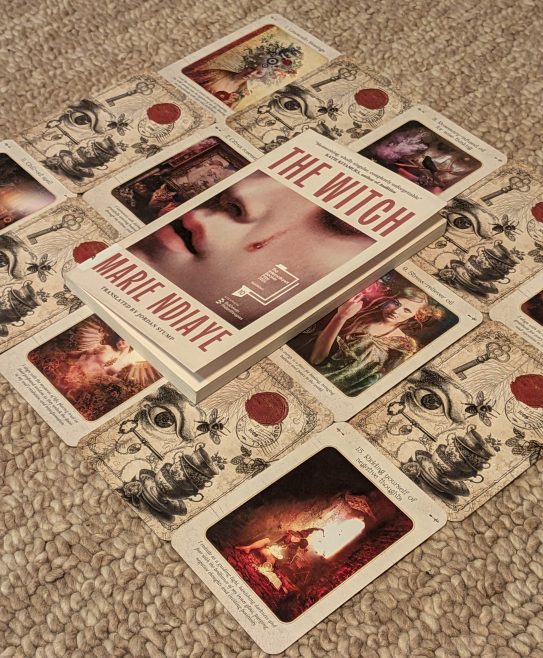
Recommend: Yes
The skills I’ve amassed during my thirty odd years of life sum to a paltry collection. I can make a tasty cheeseburger (though what cheeseburgers aren’t?). I hit a consistent backhand in tennis despite very inconsistent practice. I can offend and/or compliment people in such a backhanded way they are not sure they should feel offended and/or complimented. A paltry collection without doubt.
So I could relate to Lucie, a remarkably untalented witch.
Lucie is a descendant of a line of patchily magic-enhanced women. Her mother, a brilliant witch, sparks spells as effortlessly as Professor McGonagall. But Lucie is about as gifted at turning tricks as the Dursleys.
Lucie’s signature witchy contribution to her family line are her pathetic prophetic visions. An intense bout concentration might show Lucie a close up of someone wearing a tie, or not wearing a tie. Like a photo accidentally taken when you were trying to open a different app on your phone, all fuzzy and unfocused.
“I did make out something about your little Steve, yes, I saw him, maybe twenty years old, walking down a wide avenue, under a morning sun full of promise. He was wearing a white shirt but no tie, I sensed a smile on his face. That’s what I saw Isabelle. It took a lot of trying.
Life is pretty wretched for Lucie. She has a capricious husband that refuses to discuss her powers (and flatly refuses to discuss anything else with her for good measure) and two little daughters who are infinitely more talented than Lucie at witchcraft already. I can’t imagine Lucie has ever been happy. Wherever she turns she must navigate a disgruntled neighbour or family member.
There’s something about genre that I need to make perfectly clear. The Witch is not a fantasy novel. It is a domestic tragedy. Lucie is a failed witch, a failed wife and a failed mother. The expectations to which she has not lived up to are countless, and each one weighs her down so heavily that she cannot, like her daughters, turn into a crow and take to the air.
The things impacting Lucie most strongly are not spectres or ghosts or ghouls but the regular, everyday, crappy trappings of society.
I remembered how, despite the affection I’d always felt for Pierrot’s mama, it seemed that just walking into her kitchen – long, low, and dark, opening onto the street, at once scrubbed to excess and thick with a smell of daily soup and musty refrigerator – that just setting foot on the warm, gleaming linoleum was enough to fill everyone but Pierrot’s mama with such boredom and dejection that all civility went out the window, all gentility, giving free reign to ugly thoughts of criminal acts, bloody but lifesaving, a distraction.
There is a sad pleasure for the reader in witnessing the mundanity of human life holding back a witch. The inference: if even the witch can’t handle the demands of her household, I can cut myself some slack for ordering Uber Eats once a week so I can write this review so I can return this book so I can eventually one day be allowed to pick up my holds from the library again. Or maybe that’s just me.
Also, this book is funny. She’s a shitty witch with a shitty life. It’s a humourous concept that is mostly well executed.
I say mostly because I do have some grievances with the novel. The story is full of Lucie’s daughters, until they get abruptly cut out. From that point on the plot never recovers. Ludicrous evens and confusing interactions unfold until coincidences tie characters back together again at the end. But whatever. It’s a cool idea, written in a cool tone. The Witch gets away with imperfections.
It is heartening to know that a paltry collection of low grade skills can be magical, sometimes.

Leave a Reply