
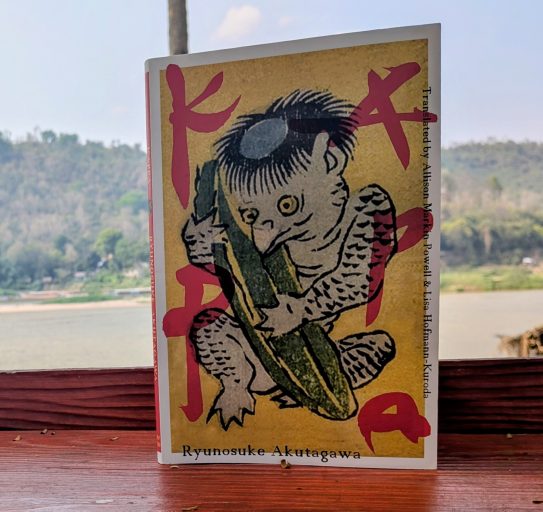
I was first introduced to the concept of a Kappa when reading the Tono Monogatari manga before our trip to Japan last year. A Kappa is a cheeky little water-goblin thing with a penchant for cucumbers. The township of Tono embraced the Kappa as its icon and we could feel the otherworldliness in the forested hills around the region. The beauty of something like a Kappa is that it is not well defined. Tolkien-style fantasy has been increasingly refined and the tropes of elves, dwarves and the like are all pretty well established in modern Western media (although there is still room for the unexpected and this is where I find they can be interesting). A Kappa is something that has one or two sentences in a book from the 1800s and is otherwise imperfectly remembered folktales and vibes.
Kappa, is a very short novel (it sits comfortably under 100 medium sized font small pages and I read it in one sitting at a coffee shop) exploring one man’s exploration of the Kappa mirror world of our own. The blurb notes the resemblance to Alice’s Adventure in Wonderland and that is a fair comparision. However unlike the mathematical riddles and logic puzzles of Lewis Carroll’s work, Kappa focuses on the societal aspects.
Each chapter is very short (a few pages) and it feels like there is a specific intent for each one to explore a different aspect of society. Romance, family, beliefs, philosophy and art are all examples. In all cases the Kappas have a similar world to us, but different in a few quirky ways as if to highlight absurdities in our own modern lives. There wasn’t a parable or clear meaning in most of them that I could discern, but the structuring make it very moorish. I always wanted to read the next chapter and discover something new about their society and in fact did so until I ran out of chapters. There isn’t any real overarching plot (although characters are common over chapters and there is continuity) and it almost feels like a set of weekly periodicals combined together.
Kappa feels unsettlingly modern for something written pre-WWI. Despite being a Japanese novel from a century ago, the themes and issues dealt with in each chapter are still very relevant although with some anachronistic references to Nietzsche and Capitalists. I also found the novel much more readable than Alice, although a more modern translation may be doing the legwork. Overall, it is a fun, quirky read that if you somehow find, I recommend.


Leave a Reply